
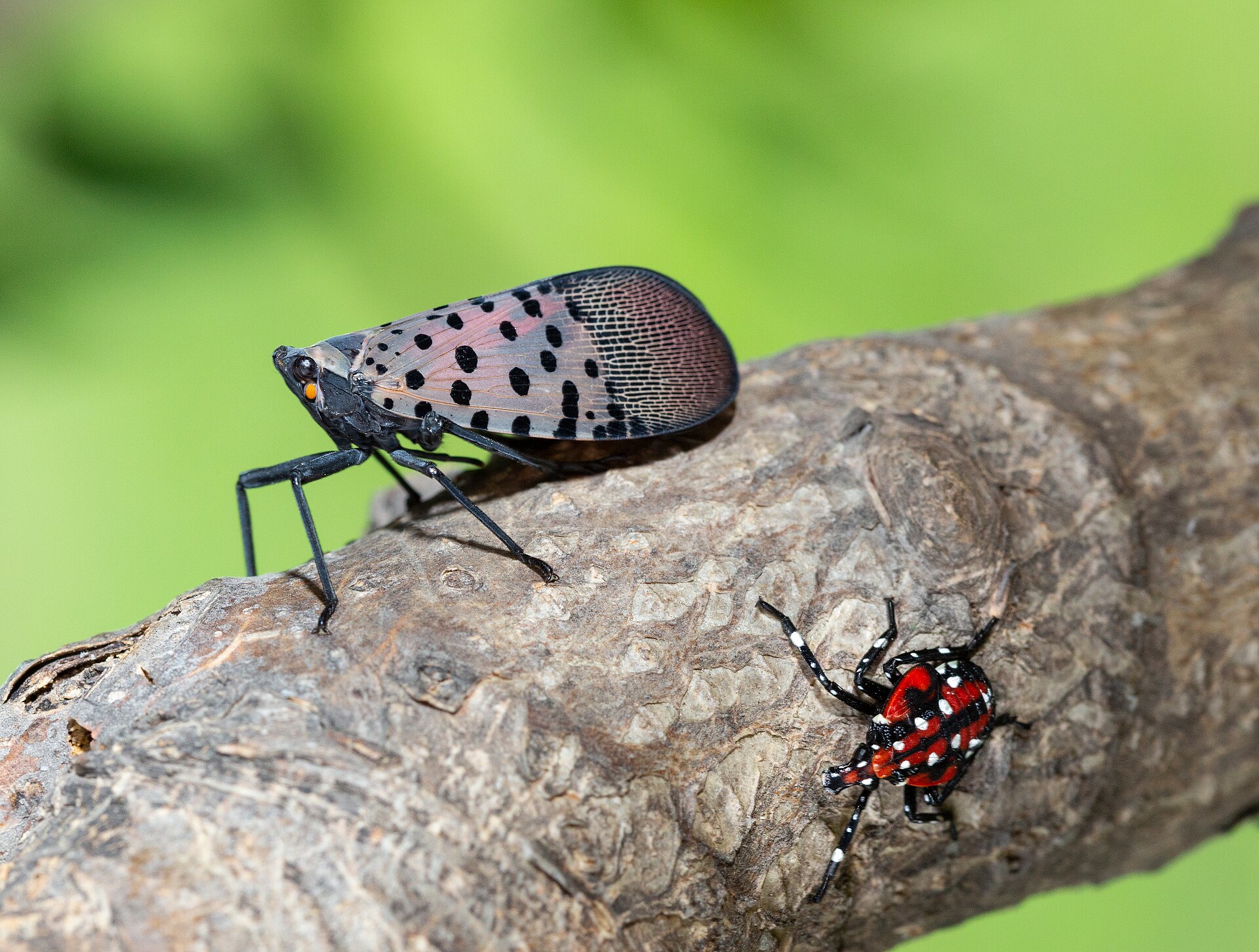
Spotted lanternfly has reached western Massachusetts. In the Berkshires, it was confirmed in Great Barrington in 2025. By June 2026, UMass had also documented active nymphs in Amherst and on cultivated grapes in Belchertown.
For property owners in the Hilltowns and Berkshires, this does not mean that every tree is in immediate danger. It does mean that careful observation, early reporting, and site-specific management now matter.
What is a spotted lanternfly?
Despite its name, the spotted lanternfly (Lycorma delicatula) is not a fly. It is an invasive planthopper native to Asia. It was first detected in the United States in Pennsylvania in 2014, and the first known Massachusetts infestation was found in 2021.
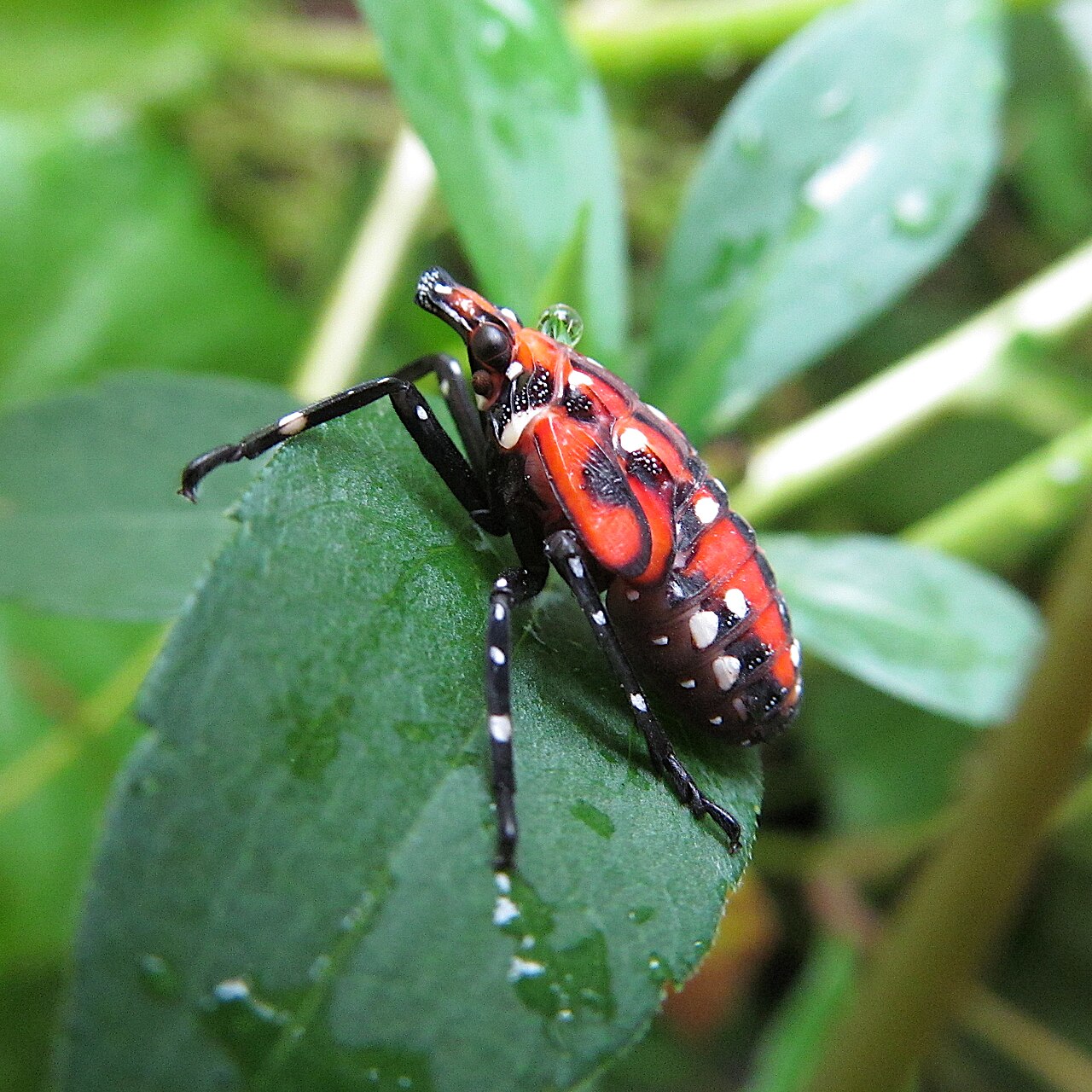
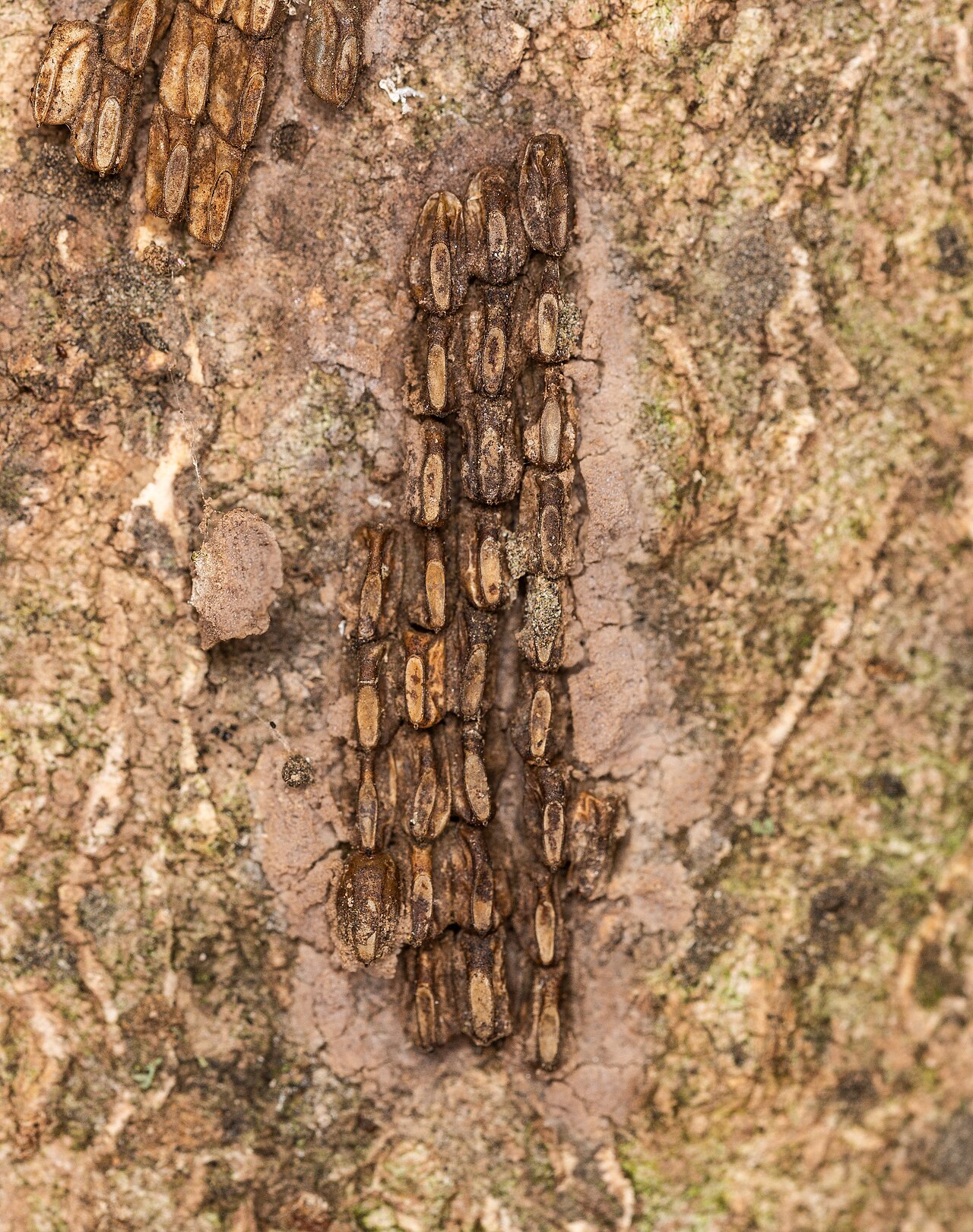
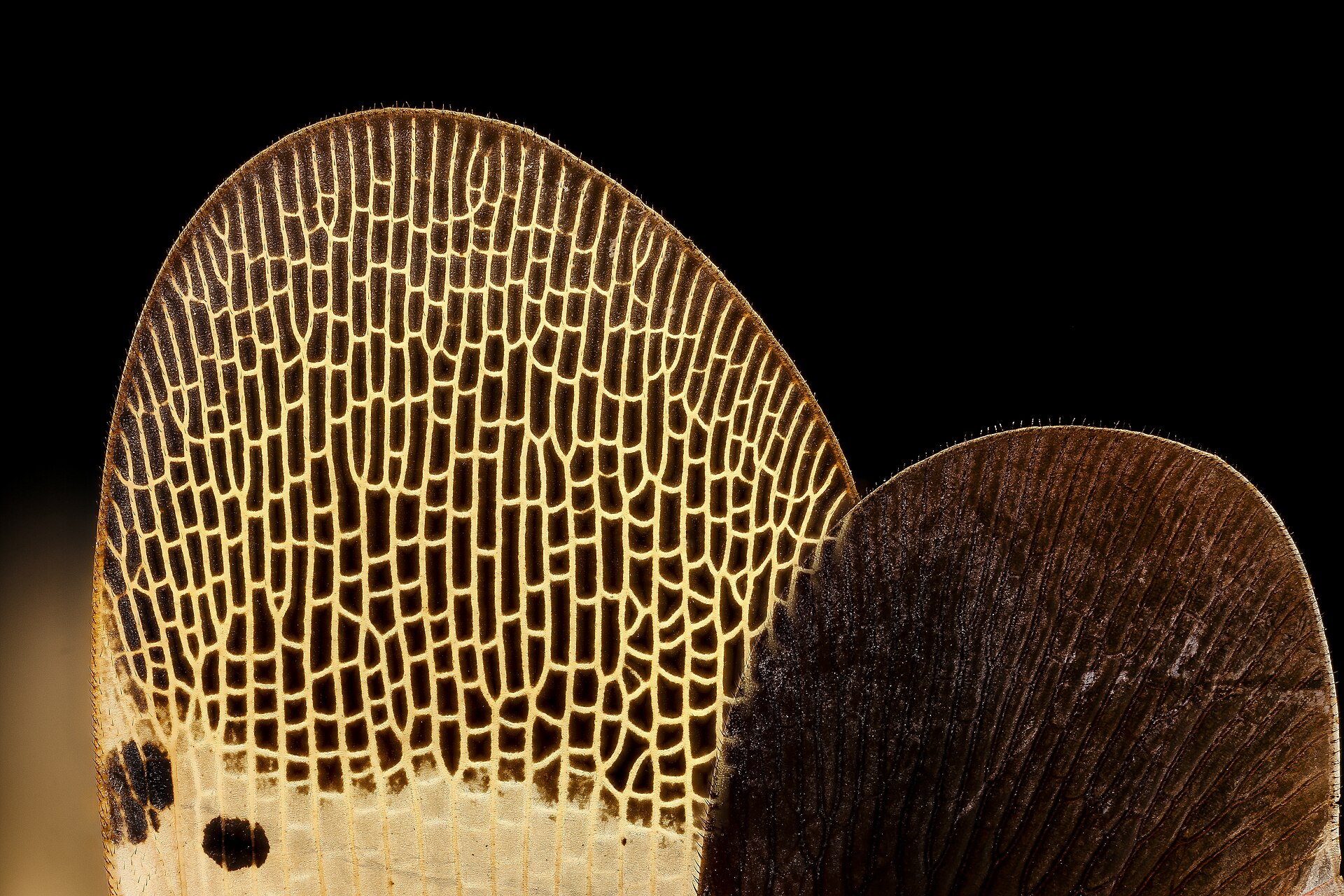
Adults are about an inch long, with gray-brown forewings marked by black spots. Open wings reveal bright red, black, and white markings. Young nymphs are black with white spots; later nymphs also develop red coloring. Egg masses resemble patches of gray putty or dried mud and may be attached to trees, stone, vehicles, firewood, outdoor furniture, trailers, and equipment.
What could it mean for our landscapes?
Spotted lanternflies feed on plant sap. Their preferred host is the invasive tree-of-heaven, but they also gather on grapevines, black walnut, maple, birch, willow, and many other plants.
Grapevines, including cultivated and wild grapes, are among the plants at greatest risk. Heavy populations may also stress young plants and contribute to branch decline. On most healthy, established landscape trees, spotted lanternfly is better understood as a stressor than an automatic death sentence.
Large groups can produce sticky “honeydew” that coats leaves, understory plants, patios, vehicles, and other surfaces. Sooty mold may grow on that residue. On rural properties with mature trees, woodland edges, orchards, gardens, and wild grape, the right response depends on the plants present, their condition, and the size of the infestation.
What should Hilltown and Berkshire property owners do?
- Learn to recognize adults, nymphs, and egg masses.
- Inspect vehicles, trailers, firewood, stone, equipment, nursery plants, and outdoor furnishings before moving them between properties.
- Photograph a suspected lanternfly or egg mass and note its exact location.
- Check the state infestation map. If the town is not already listed, report the sighting to Massachusetts agricultural officials.
- Avoid broad, preventive insecticide use. Treatment should follow a professional assessment of the pest population, host plants, plant value, and risks to pollinators and other beneficial insects.
The arrival of spotted lanternfly is a reason to pay closer attention, not to treat every tree. Good stewardship starts by understanding the whole property: valuable mature trees, vulnerable vines, invasive host plants, woodland edges, and the other stresses already affecting the landscape.
Concerned about the health of trees on your property? Learn about Hilltown’s tree care and professional assessment or contact us to define the right next step.
Learn more and report a sighting
- Massachusetts spotted lanternfly information and current map
- Massachusetts spotted lanternfly identification guide
- Report a possible Massachusetts sighting
Photo credits: adult, nymph, and egg-mass images by USDA-ARS photographer Stephen Ausmus (public domain); late-stage nymph by Cbaile19 (CC0); wing detail by USGS photographer Sam Droege (public domain). Source files are available through Wikimedia Commons.
Explore Our Portfolio

Historic Tree Preservation at Naumkeag
Storm Damage Restoration Pruning